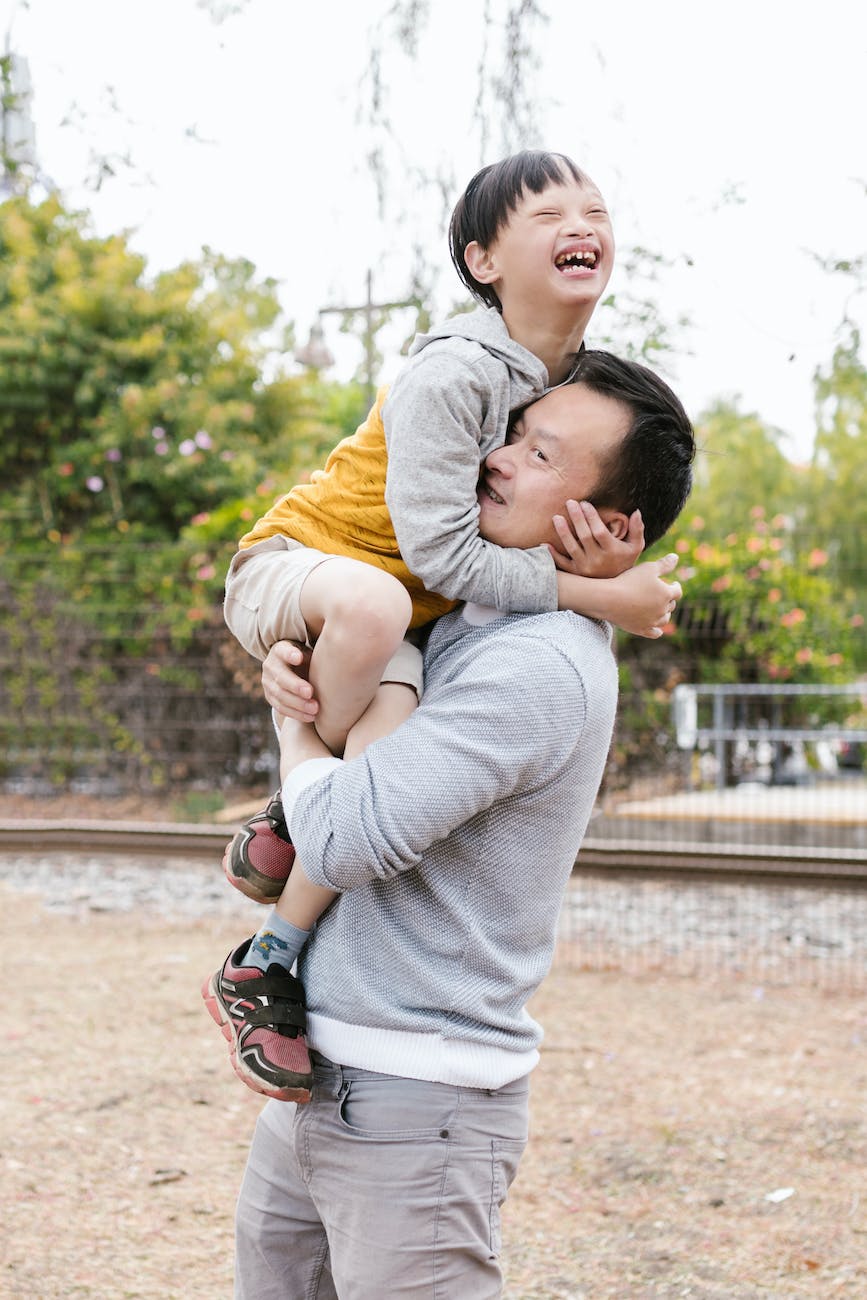
June is known as Pride Month—a time to honor and celebrate LGBTQ+ lives. In the years I’ve written this blog, I haven’t directly addressed my community, since my messages have been for everyone. But this month, I want to speak more personally.
LGBTQ+ people have faced discrimination, judgment, and rejection, especially from many religions. It made life difficult. The hardest part isn’t only enduring that, but the process of coming out to yourself and others. Through this, we develop powerful gifts, and that’s this blog’s focus. I also hope this speaks to anyone who’s felt different from the so-called norm.
Feeling different can be gutting, especially when confronted with images that remind us we don’t belong. We’re not enough and not good enough. Some try to fit in by hiding, adopting behaviors and interests far from our true selves. It’s a sad way to live. And even sadder when they convince themselves it’s their true self.
But this journey isn’t only about struggle. In the process, we discover gifts at a depth uncommon to those who haven’t walked our path. Here are a few:
Self-reflection: Our journey requires that we look within, exploring who we are at the core. We search books, attend workshops, and explore spiritualities to help us figure out who we are. We repeatedly ask, Does this resonate? Does it reflect who I am? We yearn to feel seen. Even after we’ve come out, this self-reflection continues, shaping how we live, love, and choose.
Courage: We may not always feel brave, but it’s present in every step. It rings out when we choose to stand tall, even on days we want to hide. No one else has had our individual experience, though we share commonalities with others like us. It takes courage to celebrate what we bring into the world just for being the person we are, our truest and holiest self.
Compassion: Our experiences of anger, fear, and loneliness enable us to recognize the same struggles in others. Because of it, we can offer love and understanding to those beginning the journey, caught in the thick of it, or simply living their truth now.
Self-reflection, courage, and compassion are only three gifts. Others include creativity, flexibility, sensitivity… I’m sure you can name your own.
This month, I encourage you to celebrate your uniqueness. You are a blessed and holy gift this world desperately needs. Amen. And so it is.
If you liked this blog and are interested in receiving an email for future blog posts, enter your email in the field below and click Subscribe.
The other day, I stumbled upon an article that spoke about those who still support the current administration. The essence of the article explained that many of those who still support it are driven by hatred and don’t care about anything the administration does or says. As a result, using logic to persuade them to change won’t work.
That stopped me in my tracks.
As I’ve been sending light and love out to those supporters in my meditation, I thought. Then, what is it that I can do? I immediately realized that beneath that hatred lies someone who is incredibly hurt and afraid. Perhaps that person grew up with a parent who passed their hatred on to them, or hurt them so badly that the seed of hatred was planted and grew as they faced hardships and disappointments in their life.
Again: so what can I do?
In this morning’s meditation, I visualized going up to them, and giving them a hug. I even imagined them squirming and lashing out as I continued to hug them. And then ultimately, letting go, releasing their anger, and crying. And I extended the hug to all around the world driven by hate.
Now, admittedly, I would likely struggle if I faced that person in reality. Sadly, as I watch TV and hear people spouting their hatred, I get angry, and even have to leave the room. So, for now, I give them a virtual hug, sending them love, and healing.
Finally, I want to acknowledge everyone who is challenging the words and actions of the administration with protests, who stand up to prejudice, greed, and injustice. One caution: As best as you can, let love drive your words and actions.
Blessings, peace, and a hug to you all.
If you liked this blog and are interested in receiving an email for future blog posts, enter your email in the field below and click Subscribe.
Busy and full days in 2025. I’m halfway through the first edit of book 2 of my spiritual fantasy series, tentatively titled ‘Revelations and Reckonings: Journey of a Spirit Healer. I received a few messages over the last month from my divine advisors that I wanted to share: Attend; Recognize your power but release control; and Feel and share the light.
Share the Light
Attend
Attend to your body: Does your body need special care right now? More rest? Are you working too hard?
Attend to your spirit: Is your psyche stretched to the limit with all that’s happening today. Is constant and chaotic news dragging you down, or causing you to be angry with others. Take time to reconnect to your divine self and feel the love and support of your guardian angel, guides, and God.
Recognize your power but release control
In the face of actions by the current U.S. administration, it’s easy to feel powerless. But we are not. We carry innate power not only as citizens, but by virtue of enfleshing the divine: our soul. Really take that in. Connect with the fullness of who you are, and feel the strength of all divine beings.
With that power comes the invitation to your part, whatever you identify that to be. But it also comes with a reminder to release control of the outcome. I know that’s difficult to do. And that leads me to the last message.
Feel and share the Light
Each day, experience the light that is your divine essence. A friend shared a practice that might help: while walking outside on a sunny day, imagine you have wings extended outward. Feel the light and warmth falling on them being absorbed into the depth of your being, strengthening you and helping you live your truest self. Then, throughout the day, radiate that light to all in our country and world. A practice I’ve added is to find childhood pictures of those currently in leadership. I imagine them to be hurting, scared children, desperately yearning for love and acceptance. By sending them light and love, my hope is that these children, now inner children inside the adult, experience a change and remember the best selves they are called to be.
Attend; Recognize your power but release control; Feel and share the light
Those are the messages I received. I radiate light and love to you as you bring your true self forward into the world.
If you liked this blog and are interested in receiving an email for future blog posts, enter your email in the field below and click Subscribe.
This is a short story, rather than a blog. It takes place in the world of my novel, Shadows and Light: Journeys of a Spirit Healer, the first book in a five-book series. The story occurs a few years after Book 1 ends. Since this is a full story, it’s longer than my usual entries.
Grrrraugh…Grrrraugh….Grrrraugh.
The guttural sound came loud and deep, vibrating in her chest and raising the hairs on her arms. Fear enveloped her, but instead of screaming, she sat frozen. Where was the sound coming from? Her gaze darted to the forest a hundred feet to her left, searching for movement. It was rare for beasts to charge into the village, but it did happen. A wild boar had gored a young man last spring.
Why hadn’t anyone in the house rushed outside? Then again, with how loud her family was, her father especially, they probably hadn’t even noticed. Heart pounding, Nuvanyaa scanned the ground for a weapon. A tree branch, a large rock, anything. But there was nothing. The flat bench on which she sat offered little protection. She was about to flee inside when, out of the corner of her eye, she caught movement in the sky above her.
“A skyborne?” she uttered in disbelief. In fact, there were two. One chasing the other. Then she noticed a third, much larger and farther behind, its deep growl unmistakably the source of the earlier sound. She exhaled with relief.
Skybornes didn’t attack humans, according to the village shaman, Qaum’tuk’e. She had once explained that they possessed great wisdom, regularly leaving their nest within Ikuma’Morr, the mountain range west of the village, to offer guidance to any who sought it. But, long ago, humans dealt them a great insult, and since then, the skybornes have kept their distance. Nuv could hold a grudge, but never that long. She wished they’d forgive humans and break their silence, at least with her.
Reseating herself on the bench, Nuv, as she preferred to be called, watched as they winged out of sight, a gust of wind blowing her shoulder-length black hair every which way. Wouldn’t it be something to fly free like the skybornes? Unlike her, who felt tethered. But that was impossible, brushing away the tangled strands that clung to her face in irritation. Nuv bemoaned not having shorter hair like the village boys. Her Ana’a—mother in her people’s language—wouldn’t allow it. Most wouldn’t expect such a forceful will from a woman barely 4 foot 11, with dark brown hair and a slight frame. Defying her was nearly impossible. The thought settled like a heavy weight on Nuv’s chest, dulling the momentary excitement of seeing the skybornes.
Her unhappiness had driven her outside to her mother’s garden today, her 17th birthday. Even the vibrant flowers before her, the pink, yellow, and red tulips that were her mother’s favorite, and the purple and white lilies, her own, couldn’t lift her spirit. A few years ago, when Ana’a proposed planting a garden, she suggested Nuv mix the colors, creating a rainbow effect, rather than arranging them by type. It had always struck her as odd, given how much Ana’a valued order in other areas of life. At the moment, the effect felt colorless.
As was their custom for special occasions, at noon supper, her family celebrated her birthday. As they enjoyed the carrot cake Ana’a had prepared, her younger sister, Laniiyaa, brought out their parents’ gift—another floor-length tunic that Ana’a had made, trimmed with flowers and hearts. Lani had exclaimed, “Isn’t it beautiful, Nuvanyaa? Pushing her long dark brown hair away from her almost cherubic face, Lani placed the tunic in front of Nuv. “Ana’a, even let me stitch the hearts around the collar.”
The tunic was beautiful, and Lani’s hearts were perfect—a testament to her skill as a seamstress at just thirteen. But regardless of its quality, Nuv felt uncomfortable wearing similar tunics. She preferred shorter tunics with pockets, like her brother, Maniituk’e. Mani was four years older and took after their father, muscular, tall, with a square jaw. Nuv bore the same jawline and height but had a slight frame, like Ana’a.
Next to Nuv on the bench was Mani’s letter. He had written that he probably wouldn’t be here for the celebration. It saddened her, but she understood. He lived with his wife on her family’s farm in the land south of them, Docha-leigh. He had moved away less than a year earlier. She wished he’d been able to come. She’d have talked to him again about her unhappiness. While Mani didn’t always understand, he listened.
Beside the letter lay a carving tool and a small block she’d begun whittling. Nuv didn’t know what shape would emerge, what her Ata’a called its form. Like him, she let the wood speak in its own way, adjusting with each cut. She loved running her fingers over each piece of wood, discovering its unique texture, from smooth and yielding to dense and firm. That sounded strange to some. Lani, for example. But Ata’a understood. As the village carpenter, his business was making furniture. Occasionally, for himself or as a gift, he carved animals like a bird, fox, or bear. Ana’a sometimes complained that it was a waste of time and wood, calling it foolish. But Ata’a would shrug, insisting it kept his hands nimble.
Nuv smiled, remembering how Ata’a praised his eldest daughter’s wood skill to one of his customers. Working with wood was unusual for a girl, but he encouraged it. She and Ata’a had even created the bench she sat on. She recalled the day he suggested they create it together.
The previous autumn, she’d been sitting on the ground next to the garden, enjoying the unseasonably warm weather after spending an hour removing dead flowers. She had worn the long tunic her Ana’a had insisted on, the one with butterflies around the collar, lace cuffs, and a pink bow on each shoulder. She maintained that the style would attract a proper mate.
It was grotesque. And she wanted nothing to do with anyone who found it appealing.
By the time Nuv finished her work, dirt and mud covered the tunic, especially from the waist down. Somehow, she’d even torn a cuff. She hoped that when Ana’a saw her filthy tunic, she’d finally agree that a shorter tunic was more practical. That didn’t happen. Instead, Ana’a scolded her for not being more careful, pulled the tunic off her, and declared, rather theatrically, that she and Lani could restore it to its pristine condition. That reaction only made Nuv feel more estranged. If Ana’a knew the truth about her, feeling a quiver in her stomach, how would she…?
Looking down at the new bench again, she recalled Ata’a’s question when they planned the project. ‘Nuv, what wood should we use?’ Besides Mani, Ata’a was the only one in her family who called her Nuv. Would he understand if she told him?
Soon after her brother moved away, Ata’a had asked her to spend more time with him in his carpenter shop. Working more with wood and being with Ata’a’s brought her some comfort. But Ata’a had rules. Two of the most important were arriving on time and not ‘daydreaming,’ as he mistakenly called her unhappiness. Ana’a had frowned at the request, determined as she was to train Nuv as a seamstress like herself. Nuv wasn’t sure why. She wasn’t good at it. And she hated it. But neither of those things mattered, despite the number of times Ana’a had to repair Nuv’s mistakes.
It made no sense.
Ana’a kept repeating that every woman had to know how to sew, going on and on about how nice it would be if they started a business together. Nuv kept reminding her that Lani was a better choice. But Ana’a insisted it had to be her, now that she was approaching marriageable age.
Back to Ata’a’s question, Nuv looked down at the bench: western red cedar. She knew it had been a test. When she named this hardwood, he had smiled approvingly and said, ‘Good choice.’ She had chosen it because she knew it was durable enough to withstand harsh weather, like the huge snowstorm they had last winter.
His praise had warmed her then. Now, it did little to dispel how lonely she felt.
It all started four years ago. One morning, Nuv woke up to find blood on her sheets. Ata’a told her it was her first moon-blood experience and pointed out that her chest was also growing. Nuv responded with tears.
Ata’a misunderstood, believing they were happy tears about finally becoming a woman, which only made her cry harder. Her body was betraying her.
From then on, every month brought another episode. Ana’a provided her with small pieces of cloth to wear under her clothing when her time neared, in case it happened unexpectedly. These episodes were wrong. They shouldn’t be happening. It wasn’t happening to the boys her age in the village.
Nuv had spent her time off playing with them—climbing trees, exploring, and occasionally getting into mischief—until she accidentally told Ana’a, who put a stop to it. Months later, following an episode, she was so upset about the changes that she climbed to the top of a cliff outside their village to…
Nuv, a voice said in her head.
Did her Ata’a just call her? The voice sounded male. But it couldn’t be Ata’a. After her party, he had to make a delivery of a teak trunk to an insistent and wealthy customer on the other side of the village.
Nuv, the voice repeated more loudly.
Iosef? Nuv mind-spoke,chagrined she hadn’t recognized his voice right away. Iosef, her guardian angel, first made himself known to her that afternoon at the cliff, when a white feather drifted down from an empty sky with no birds in sight.
Indeed. I’ve been watching you sitting there, and I know you’re unhappy.
Surely, that’s no surprise. You know I’ve felt this way a lot since my body started changing.
I do. I had hoped that working in your Ata’a’s shop more would have brought you some joy.
It does. Or it did. But then Ana’a had to give me another girly tunic today.
I saw.
I was so hurt that I ran out as soon as I could after the cake.
How can I help? Iosef asked, sympathetically.
Can you make me a boy? I know you can’t. But why was I born a girl if I feel like a boy inside?
That’s a tough question. It’s the first time you asked me that.
I’ve thought about it enough.
I’m glad you finally asked. Let me ask you something first.
OK, she mumbled.
Have you ever wondered whether it has something to do with your life’s purpose?
You mean to feel alone? To be laughed at, taunted, and sad all the time?
So, you’re angry and unhappy. He paused before continuing. Does this still have something to do with the boy you saw weeks ago?
Nuv sat quietly, recalling the incident. Her Ata’a had asked her to get resin glue from a crafter with a shop on the main road. She had just stepped out of the shop when she saw some entitled village sons chasing Seavuuk, hurling curses at him. Even calling him ‘it.’ She hid around the corner of a nearby building, too afraid to intervene. The boys shouted that they’d catch him the next time, and then he’d be sorry.
Nuv only barely knew him, but he usually wore long tunics like Ana’a made for her. Ana’a had admired them at the weaver shop where he worked. But after praising the craftmanship, she added that such were not appropriate for men.
Iosef remained silent, allowing Nuv time to reflect.
At last, Nuv mind-spoke, Yeah, I guess it’s related. After a pause, she added, I still can’t believe he wore them in public.
That took courage.
When I’m in public, I try to remember to wear a scarf over my head to cover my shorter hair. Yesterday, I heard that Seavuuk’s parents turned him out, and that he hadn’t shown up for work. Do you think he is… like me?
I would imagine so.
Where do you think he went?
Most likely, somewhere people would treat…her…kindly. Or at least not reject her.
I hope so, Nuv replied wistfully. Some called Seavuuk a freak. Is that what I am?
No. I’m sorry you even thought that. In your world, I’ve heard that people like you call themselves shiftwoven.
“Shiftwoven,” Nuv repeated, rolling the word over in their mind. It felt… right. I like that. But the thought of saying it aloud to people—of claiming it—sent a surge of terror through her. Am I a coward by not telling my parents?
Absolutely not. It took courage to tell your brother.
I was scared before I told him, but I knew he loved me. I could handle that. But telling my parents? Or the village? That’s terrifying.
I understand. It’s a new idea for people of your period. You’ll know when it’s time. Trust your instinct.
But why me? Nuv asked, silent again. I wish you were sitting next to me. It would mean so much to have you hold me. Would I even be able to do that?
Let me answer your last question first. That can happen if you visit the divine realm while sleeping.
Really? How?
Before you go to sleep tonight, hold that as your intention.
I will. I promise, feeling a flicker of hope.
Now, to your ‘why me’ question. May I speculate?
OK.
What if the struggles you’re going through could help another person deal with the same thing?
I don’t know how. I didn’t stand up for Seavuuk.
You weren’t in a place where you could do that. Not yet. But one day, you’ll come upon another and can listen to their pain as I and your brother listen to yours.
Maybe, Nuv considered, . She did like helping people. She loved watching Ata’a’s customers’ faces light up when they saw the wardrobe or bedstead he created for them. Bringing flowers to village widows also gave her joy. But is my entire life meant for others? I mean, does it all have to be about suffering?
Ah. My mistake, Iosef replied. Your life should also have play, fun, and joy. Without those, how could you truly help others like you?
Thanks for telling me. I haven’t had a lot of fun lately.
I know it’s difficult. I’m here for you, as are others in this realm. Even your ancestors, like your Ana’a’s Ana’a. They’re very proud of how strong you’ve been.
I don’t feel strong. But that helps a little, I guess, Nuv said, sighing. But it’s not the same…
What about your brother?
What about him?
Isn’t that him coming up the path?
“Mani!” Nuv screamed with delight, when she saw him and his wife, Iluugta. Running toward them, she threw herself into his arms, holding him tightly.
Mani chuckled. “That’s some greeting.” Pulling away moments later, he said, “Sorry we missed the celebration. We planned to arrive this morning, but Iluu had morning sickness.”
“Do you mean, she’s…?”
“Yes,” Iluu answered. “Mani was so worried about you—and about the gift Ana’a might give you that I insisted we make the trek.”
“Does that mean…you know?” Nuv cautiously asked.
“Yes. I don’t understand either, but know that I love you.”
“What if the three of us take a walk along the stream tomorrow, and you can tell us what’s going on?” Mani suggested.
“Oh, please,” Nuv said, hugging her brother again, before embracing her sister-in-law. “And congratulations!”
“We’d better get inside,” Mani advised. “Ata’a, Ana’a, and Lani probably heard you scream.”
As Nuv followed them toward the front door, she smiled, whispering, “Thanks, Iosef.”
If you liked this blog and are interested in receiving an email for future blog posts, enter your email in the field below and click Subscribe.
For spiritual teachers, the imposter syndrome centers on the belief that she or he doesn’t know enough to be a teacher and the fear that someone will find out. I admit that I’ve struggled with that.
For much of my early life, I relied on logic. I believed there were answers for everything, and each question had only one answer. When I went to the seminary and began studying the scriptures, I faced a dilemma. After reading one theologian’s interpretation of a Biblical passage, I concluded he was correct until I read another’s. Who was right? Which one was lying?
Fast-forward 12 years. After leaving the priesthood, I continued my search for the truth about God, myself, and life. Without realizing it, I continued searching for the one spiritual teacher with all the answers. When I found one with whom I resonated, I became excited. Here was someone who had similar experiences. Providentially, that lasted until I heard a teaching that didn’t match my beliefs. I must admit that I felt a little betrayed. That was a good thing. The last thing I needed was to rely on one person.
Years passed, and I continued seeking out teachers, eventually learning that one person doesn’t have all the answers and to rely on what resonated with me. But I was still driven to learn. Last year, I overextended myself, attending so many workshops and seminars that some conflicted. In one of them, a teacher brought up the imposter syndrome. I realized my drive was based on that syndrome and my underlying fear. Furthermore, my divine advisors challenged me to believe in myself.
While I’ll continue to sign up for workshops that interest me, a key resolution this year is to release my lingering fear of not being good enough, trusting that I have something unique to offer. What about you? Have you struggled with the imposter syndrome? Are you signing up for endless workshops, leaving you little free time? Consider reflecting on whether you do so because you don’t believe you know or are good enough. Through our intuition and divine soul, we have access to knowledge and wisdom. It’s up to us to listen and discover a path unique to our experience that serves the highest good.
If you liked this blog and are interested in receiving an email for future blog posts, enter your email in the field below and click Subscribe.
Yesterday, I experienced an Akashic reading with a beautiful soul, Jane. For those unfamiliar, the Akashic or Akashic Records are an expanse of experiences, knowledge, and consciousness that surround us. Existing outside of time, they encompass the past, present, and future. As a bookworm, I imagine it as a vast library where I can check out a book to uncover insights to guide my life and calling.
In the reading, rather than pulling information for me, Jane tapped into the divine energy and experience of being in the flow of the Akashic. What she shared was incredible. Many messages stood out. The one that’s coming to me now is the experience of radical presence.
As a recovering workaholic, I spent a good portion of my life always looking ahead. What do I have to do today? What’s the next project? What can I cross off my endless list? For years, I’ve endeavored to live more in the present. Radical presence suggests taking that to the next level.
On my morning walk, I wondered what radical presence might truly mean. Could it be quieting my mind, feeling each step, breathing in the crisp air, and appreciating the trees and plants by touching their leaves and bark? While these felt like steps toward it, I sensed there was more I couldn’t quite name.
Years ago, while studying counseling psychology, I read about radical acceptance. It dealt with accepting all we experience in the moment. It wasn’t about surrendering to injustice, discrimination, and the like; it was about acknowledging the fullness of what you are experiencing rather than denying it. Might radical presence then be the foundation on which radical acceptance rests?
What are your thoughts? What does radical presence look and feel like? As we move into the holiday season and approach a new year, perhaps play with that idea and see what floats to the surface from the Akashic river of consciousness.
If you’re interested in having an akashic reading from Jane, you can contact her through her website, akashicjoy.com.
If you liked this blog and are interested in receiving an email for future blog posts, enter your email in the field below and click Subscribe.
This might seem a ridiculous question. Arrogant people strut like they own the world, treating everyone as their servants or worse. Whereas, those who struggle with low self esteem often hide from the world, feeling like they have no value. So how could the answer to my question be, yes? Let me share what led to this question.
Two nights ago, I fell into the same dream repeatedly. That, in and of itself, told me it was important. The dream was a warning of sorts to be wary of becoming arrogant. Most who know me would conclude it wasn’t about me.
When I finally arose to start the day, I spent some time in meditation to reflect on it. As I did, I recalled the numerous occasions, while in the early stages of writing my novel, when my divine advisors told me it would be a great success and lead to other opportunities as a spirit healer. With that was the reminder to ground myself in gratitude and true humility.
During my meditation, I also thought about people who I would characterize as arrogant. A few political leaders came to mind. Some common characteristics came to mind, loud, self serving, and ultimately bullies. I believe that beneath their exterior lies low self esteem. But rather than venturing into their pain and insecurities, which takes courage, they choose to take their pain and fear out on others. So, indeed one could be the shadow of the other.
One word of caution, to those reading this. If you are still struggling to recognize your own innate value and beauty, this message is not for you. I’m reminded of something my first spiritual director, Dustin, told me when I was a novice in religious life. At that time, my self esteem was almost non-existent. I looked to others to form my identity and using the book, The Imitation of Christ, as a guide. The book is focused on self abnegation. Providentially, Dustin was also a licensed therapist and directed me to put down the book. It was a graced moment.
Returning to the dream, I knew it was a gentle reminder, as I prepare to send my first novel off to the publisher next month. Enough for now. I’m on vacation and I felt drawn to post this. Blessings to all of you as you celebrate your beauty.
If you liked this blog and are interested in receiving an email for future blog posts, enter your email in the field below and click Subscribe.
I heard this phrase recently, and it really struck me. Apparently, it’s the title of a book written by Barry Stevens in 2005. It basically means to let go and trust the timing of the universe. Sometimes, that’s easier said than done.
Over this last year, as a spirit healer, my divine advisors have reminded me to trust them and believe that everything is happening as needed. One of the main areas this applies to is editing and publishing my first book in my spiritual fantasy series. If you’re not aware, editing takes a long, long time and can be quite tedious. Compounding the tedium is learning about something called “show, not tell,” which means that rather than providing information about a character or a situation, create a scene. It makes sense. But it’s required a good amount of rewriting. Because I started this book at the end of 2021, I’ve found myself impatient to complete it and move on to book 2. The message from my advisors echoed the 2005 book title.
Have you ever been in that situation? It can be challenging to embrace. Sometimes, the feeling of impatience comes with the belief that you must do something. Doesn’t the universe, God, or our higher power require us to do our part? If so, then how much are you supposed to do? Per the river metaphor, aren’t there pebbles or rocks you have to move to help it flow better?
As a recovering workaholic, recognizing when to do something and how much is challenging. It comes down to listening to my intuition and being attentive to my body, which gives me warning signs when I’m pushing. For 2024, my intention is to wait for the opportunities to guide me about when to take action. I’m not letting my advisors off the hook; I’ve asked them to make them obvious.
As we approach the end of 2023 and the start of 2024, I realize that some of you might be scrambling to buy presents or stressing about holiday gatherings. But maybe the metaphor is appropriate. Let the river flow, breathe, and find some time to relax and enjoy.
If you liked this blog and are interested in receiving an email for future blog posts, enter your email in the field below and click Subscribe.
A central tenet of my belief is that God, angels, and all divine beings are always watching over us. My sense is that’s a common belief for many. This means that they watch us every moment of every day. I’ve been fortunate to sense their presence through a tingling sensation coursing through my body, something I first experienced a couple of years ago.
Two weeks ago, this took a comical turn. How do I say this politely? I felt their presence (that is, the tingling) while urinating. Yeah, I know it sounds gross. Some might think it was nothing more than a physical reaction. I would normally agree. But when I checked with my divine advisors, they confirmed it. Now, I could imagine some calling me blasphemous for saying such. But if you think about it, if God is truly present to us in every moment, then that includes our most mundane activities. It was an important lesson to be reminded of. Think about it.
Now, this might have been the end of the lesson had it not been for the fact that the tingles have continued since then every time I took care of business. When I accused my divine advisors of being weird, they laughed. From that emerged their next lesson: Divine beings don’t limit themselves to solemnity and seriousness. They also have moments of joy, laughter, silliness, and playfulness. Try to imagine what that might be like. Might they be luminous balls of energy careening around the divine realm and having fun? Might my guardian angel go so far as to muss my hair or even poke me?
I must admit that for much of my life, I treated my spiritual journey as a serious business with no room for laughter or silliness. But by doing so I excluded experiences that were light and in fact healing. What about you? Does your own spiritual journey include laughter and playfulness? Like me, it could lead to unexpected moments.
If you liked this blog and are interested in receiving an email for future blog posts, enter your email in the field below and click Subscribe.
Have you ever had the experience where you knew something good was going to happen but you doubted it because your own feelings of unworthiness overpowered it? I have. Last Monday, I attended a session of Cosmic Community, a program offered by Dougall Fraser. The focus was manifesting your vision. Our homework was to visualize our dream, feel the emotions that you’d feel when it became a reality, and then notice and explore any feelings of unworthiness arise.
For me, the dream is the publishing the first book in my spiritual fantasy series. The thing is that for this my dream, I’ve gotten a constant message from my guides though spiritual readers that my book will take off. Despite that, I’ve struggled with doubt, and questions like, “what real proof do I have that that’s even possible?”
Reflecting on this, I received the following question from my guides: “Why does not knowing the details about how this will happen, result in doubt? Must the unknown equate with doubt? I immediately knew that it didn’t. And with that, I felt a weight lifted. Not knowing the how, when or what of a future blessing, doesn’t mean that you have to doubt that it will occur.
Yesterday, I was challenged to go a step further, when I learned that my sister planned a surprise trip for her husband’s birthday. For him, the how and where are unknown, but with that comes excitement. So, in place of the doubt we let go, can we embrace excitement as we anticipate our dream manifesting?
To that end, I invite to do the same homework I have, as part of your daily meditation. Sit or lie down somewhere comfortable and do the following:
Visualize your dream or the good that you desire. What does it look like? What are you wearing? Who are you with?
Once you clearly see than image, become aware of the emotions that you experience, for example, happy, fulfilled, grateful, etc. But feel them not just as a future experience but in that very moment; in effect, you are inviting that dream to begin manifesting now.
Finally, notice if any unworthiness, doubt, or fear arise. Acknowledge them with the intention exploring their why later. Then, invite the feelings back that you had of your manifested dream. Then, hold them in your heart throughout the rest of your day.
If you liked this blog and are interested in receiving an email for future blog posts, enter your email in the field below and click Subscribe.