Two nights ago, just past midnight, I woke up, and a message resounded very clearly in my mind. It was immediately followed by a dream. The dream ended with a variation of the first. I wanted to share them with you.
Message One
Sometimes the most profound teaching can come through the most mundane and simplest circumstance.
Message Two
Sometimes the simplest words offer the greatest and most profound teaching and healing.
That’s it. After the long excerpt from book one a few days ago, it made sense that this blog would be short and sweet. I must also admit that I find it interesting that I’ve been posting quite a bit this month.
Peace.
If you liked this blog and are interested in receiving an email for future blog posts, enter your email in the field below and click Subscribe.
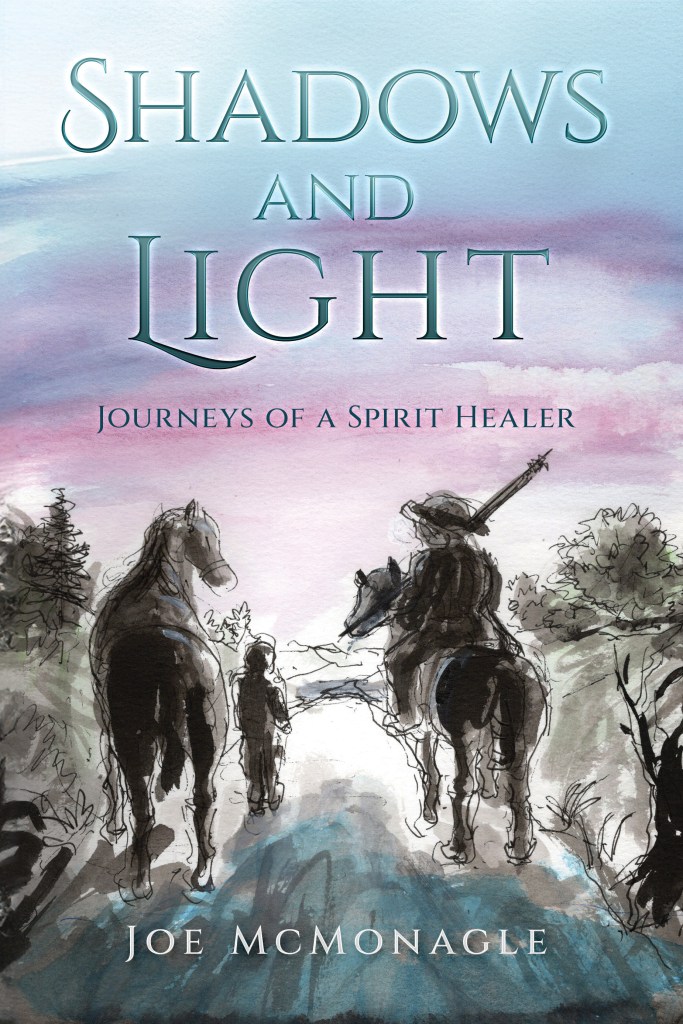
Sometimes, the danger you sense isn’t imagined—it’s real. Here’s a glimpse into Chapter 11 of Shadows and Light: Journeys of a Spirit Healer, where Thom’s strange healing gift draws the attention of someone with dark intentions.
This post isn’t one of my usual blogs. Still, like them, the excerpt explores the themes of life, God, and purpose, as revealed in the journey of Thom Macirdan. Shadows and Light is the first in a five-book Journeys of a Spirit Healer fantasy series.
Thom was working on a vase when he felt Lord Samiltun’s loathsome energy. It wasn’t long before he heard the carriage. “Da,” he called out. “I think we’ve got a customer.” He didn’t want to tell him it was Lord Samiltun because he didn’t think his father would understand how he knew.
Shortly after, footsteps crunched on the gravel path leading to the pottery. And, before anyone could stand, Lord Samiltun walked into the work area.
“Oh, Lord Samiltun,” his Da said. “I was about to take your sample bowl out of the kiln. Redik, would you help me?”
Lord Samiltun grunted.
Thom felt his presence behind him.
“And what are you working on, lad?” Lord Samiltun asked.
“Um,” Thom gulped. “A bud vase.” This time, the probing felt stronger and touched various parts of his body, like his Mam would do when she examined a patient.
“That’s an unusual shape,” Lord Samiltun remarked, placing his hand on Thom’s shoulder.
Like before, Thom pushed back, but he didn’t think it was as successful. “Yes,” he replied. “The customer wanted the mouth of the vase curved to make the flower more visible.”
“What are those blue stones for?” he asked, pointing to the left of Thom’s wheel.
By now, Thom was gritting his teeth and shivering. He didn’t like the lord touching him, and his stomach started yelling at him. “One of Da’s specialties is adding decorative stones to the clay before firing it.”
“And what about the pink in the dish there?” he asked, pointing.
Why can’t he leave me alone, Thom thought, feeling his breath quicken. “Sometimes, we add a splash of color for accents,” he told him, shrugging his shoulders, hoping that the lord would remove his hand. But to no avail.
“Interesting,” Lord Samiltun commented, shifting his hand slightly to see if he could read the boy better.
In desperation, Thom pretended he needed a tool on a bench nearby and stood up, forcing the lord to remove his hand. “Is there anything I can help you with?”
“No,” Lord Samiltun responded. “It looks like it will be a nice piece.” He still couldn’t determine the nature of the boy’s gift or strength from his examination. If his gift was substantial, which he thought it was, he’d be a great asset. As young as he was, he was undoubtedly untrained. That would make controlling him easier. Now, he needed to make him and his father more amenable.
“Lord Samiltun,” Da called out. “Your sample piece is ready to evaluate.”
Lord Samiltun stepped away from Thom and went to the other side of the work area to a table where his Da had placed a blue bowl.
Thom resumed his work on the vase, feeling his breath ease. Focusing on smoothing the curve at its mouth, he realized he felt warmer. That’s weird. The pottery wasn’t any hotter than usual. While he sipped a cup of water nearby, he relished Lord Samiltun’s praise for his craftsmanship. Maybe he could earn money by making a few pieces for him.
Leaning back and stretching, Thom overheard his Da say, “You’re asking me to add more of our clay mixture 4 to your clay? Easily done. The new mix should be ready in ten days. Is that agreeable?”
“Yes,” Lord Samiltun replied. “I must say, I’m very impressed with young Thom’s work. Would you consider apprenticing him to me a few days a week? I could set up a little pottery behind my home. I could even teach him merchanting. Having a combination of merchant and potter skills would enable him to set up his own shop one day.”
Thom looked back when his Da didn’t respond.
I think he needs a bit more encouragement, Lord Samiltun thought.
Thom noticed the lord’s hand twitch a little.
His Da finally replied, “Maybe. Learning about merchanting would be good. I’ll need to speak to my wife.”
“Of course,” Lord Samiltun responded, sneering inwardly.
After the lord left, Redik said, “Da, didn’t you say you didn’t like the man the last time he was here? Are you really considering apprenticing Thom to him?”
“I might have misjudged him,” his Da replied. “He was very nice this time.”
When Lord Samiltun returned to the pottery to see the new sample, his primary goal was the boy. Stepping into the work area, he sent more energy toward Thom and his father to make them more receptive to the apprenticeship.
Thom tried to listen while his Da showed the bowl to the lord. Wouldn’t it be exciting if he had his own pottery? He didn’t even consider how odd it would be for a boy his age.
“This is perfect,” Lord Samiltun exclaimed. “You’re very talented, Mr. Macirdan. Please proceed with making my dishware. Since you’re an honest man, here’s half the agreed cost.”
“That’s very generous, sir,” his Da responded. “The standard down payment is 25%.”
“Yes, I know. However, I’m impressed with your work and believe it merits it.”
Looking around the work area, Lord Samiltun spied the vase Thom had completed on a shelf nearby. “Oh, I see Thom finished his vase.”
Thom had turned around to face Lord Samiltun and his father.
“The blue complements the vase’s brown glazing. And the pink splash makes it something special,” Lord Samiltun said to Thom. “You are quite talented.”
“Thank you, sir,” Thom replied, turning red.
The boy’s pottery skills could be beneficial to him as bribes, Samiltun determined. Deciding to probe him once more, he discovered there wasn’t any resistance.
Sitting at his pottery wheel, Thom felt something pop inside himself.
“Mr. Macirdan,” Lord Samiltun said, “Have you considered my proposal?”
“Yes,” his Da replied. “We’re seriously considering it. Thom does assist my wife, Winni, with treating her patients. Let me talk with her again to see if our younger daughter can take his place.”
“I understand. Will you be able to show me some completed dishware in two weeks? Of course, I don’t expect all of it to be done by then.”
“Yes, we’ll have pieces to show you,” Da replied.
Outside the pottery, Rin had been eavesdropping on the conversation. He sensed Samiltun’s energy toward Thom and his father and the energetic probe. Rin knew the time was approaching for him to take Thom away.
After Lord Samiltun left, Rin returned to his shop to consider the situation. Samiltun’s last probe significantly affected Thom, about which Samiltun was unaware. First, it fully activated Thom’s healing gift. Second, it triggered a much stronger gift. One that Rin couldn’t identify. He now knew why his spirit guides told him to wait before taking Thom away. It was now time for him to implement his plan.
Rin had to hide the strength of Thom’s gifts from Samiltun when he returned to protect Thom. But before that, he needed to set the stage for their departure. He’d return in two days to suggest to Thom’s parents that he get special training. He’d already given his landlord notice about closing his shop. In ten days, he’d start camping near the pottery to ensure he was nearby when Samiltun came by again.
I hope this moment of Thom’s journey stirred something in you. If you’re curious how he got there, where his path leads, and how his gift unfolds, you can find Shadows and Light: Journeys of a Spirit Healer on Amazon: https://a.co/d/7yRDnAj
Book 2, Where the Heart Leads, continues Thom’s story—his developing spirit healer gift and how he uses it for the good of all. It’s coming later this year.
If you liked this blog and are interested in receiving an email for future blog posts, enter your email in the field below and click Subscribe.
Sometimes disruption is the doorway to divine grace.
In my last blog, I shared a message from my divine advisors about adventures and opportunities. A few hours later, something unexpected happened that changed my unwritten plans: my husband fell and broke his arm. I’m not suggesting that the accident was divinely driven. But what unfolded afterward certainly was.
With his arm immobilized, I stepped into the role of caretaker: managing the household and supporting him. I take this on out of my deep love for him. Still, it was an unplanned interruption.
Two things are important to know. First, I know my calling as a spirit healer is expanding. The messages have been clear. Second, I’ve been told the way it will unfold will be completely unexpected. The engineer in me inevitably keeps trying to figure it out. For example, I wondered if a traditional publisher might contact me about releasing the next book in my spiritual fantasy series, now titled Where the Heart Leads: Journeys of a Spirit Healer.
Up until the accident, I was chugging along at a steady pace with book 2. With my changed responsibilities, I was thrust into a new opportunity: one that forced me to slow down. As my days became more fluid, it opened space in my life for my divine advisors to ‘breathe’ and do their thing. Three nights ago, the first unexpected blessing arrived. I’ll share more about that at another time.
What about you? Is your life so carefully planned out that the unexpected feels like a setback? Are your days so organized that you’re blind to opportunities (even challenging ones) that might contain quiet blessings that support your calling?
Take a moment to reflect. Then offer gratitude. That’s what I do each morning, as something beautiful and holy grows from broken plans.
If you liked this blog and are interested in receiving an email for future blog posts, enter your email in the field below and click Subscribe.
A few days ago, I pulled cards from Denise Linn’s oracle deck, Sacred Destiny, seeking guidance about my path as a spirit-healer, and about my spiritual fantasy series. As you recall, my first book, Shadows and Light: Journeys of a Spirit Healer, was released a year ago. I’m now working on the second edit of book two, Where the Heart Leads: Journeys of a Spirit Healer.
The cards I drew were Adventures and Opportunities.
Great, I thought. I just need to stay open and attentive.
During meditation this morning, I was reminded that they don’t have to be earthshaking. They can arrive quietly in small everyday moments—easy to miss if we’re expecting something big. That insight brought two such experiences to mind.
The first came after food shopping. A man down on his luck asked for change. I don’t always give in those situations, as I donate elsewhere. But as I walked away, I felt pulled to give. It was an opportunity.
The second was an adventure. On a morning walk, my husband heard about an eagle’s nest nearby. We drove there and were delighted to find a huge nest with the adults tending their young. With binoculars, we saw the eaglets’ small heads poking up, One adult flew off, soaring in a circle above us, majestic and free. We stayed there for a while, sharing the experience with others who had gathered.
It wasn’t a grand or life-changing adventure, but it was a blessed one. And how fitting that the eagle, the national bird, appeared days before we celebrate Independence Day.
The message for me and perhaps for you is this: keep your eyes and ears open. Adventures and opportunities might be small, but they’re no less significant. And when they do come, be grateful, as I am.
And if you’re feeling called to deepen your connection with your own path, I invite you to explore the world in my book, Shadows and Light: Journeys of a Spirit Healer. It’s more than a story—it’s an adventure, opportunity, and spiritual journey in disguise.
If you liked this blog and are interested in receiving an email for future blog posts, enter your email in the field below and click Subscribe.
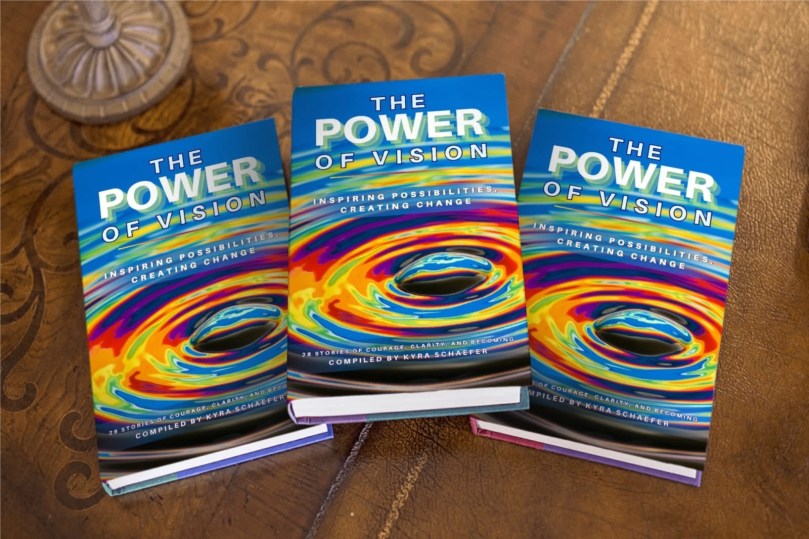
Today, this new anthology was published by As You Wish Publishing. I contributed the chapter called, “Beyond the Form.”
Per the Amazon site, this book contains “28 diverse voices who dared to ask, “What am I really here for?” From spiritual awakenings and near-death pivots to quiet moments of clarity in everyday life, these stories explore the transformational power of listening to your inner knowing and acting on it.”
A few other chapters include: “Turning Dreams into Reality” by Cynthia Carter; “The Gift of Vision” by Joanna Maragos Pantazes, and “The Cosmic Adventure of Inenite Possibility” by Deborah Rahalski.”
Your spirit or soul is a piece of the divine incarnated in your human body. As such, you are holy. During Pride Month, that includes everyone in the LGBTQ+ community. It also includes our persecutors, even those who are power-hungry, greedy, and deceitful. I believe these folks have forgotten who they are at their core. Otherwise, they wouldn’t act as they do.
Still, I don’t want to focus on them here. I want to focus on you, those who are loving, kind, and act justly. To you, I ask a question: What does it feel like to be innately good?
Two days ago, I attended an Akashic meditation session. During the meditation, Jane, who led the session, shared the message that reminded us of our goodness. I found myself wondering what that felt like in my body.
I asked my divine advisors, hoping my body would provide their answer. Nothing came. Since then, I asked again, continuing to imagine what it might feel like.
My first thought was that it might simply be the tingling I experience when connected to the divine. While the sensation was pleasant and reassuring, my intuition said that wasn’t it. That experience seemed more about my place in the divine realm, not how goodness is embodied.
Next, I wondered if it felt like confidence or contentment. But that would imply that I wasn’t innately good when I felt insecure or upset. And my intuition tells me that feeling my goodness is more fundamental.
What else might it feel like? Relaxed? Happy? Grounded? Again, they may be an outcome of our goodness, but they don’t adequately describe how it feels in the body.
So, I ask you: How might you describe the feeling of innate goodness? You’re welcome to share your answer in the comments.
Until then, may your innate goodness bless you and guide you in your life, helping you discover and live your passion for the good of all.
If you liked this blog and are interested in receiving an email for future blog posts, enter your email in the field below and click Subscribe.
June is known as Pride Month—a time to honor and celebrate LGBTQ+ lives. In the years I’ve written this blog, I haven’t directly addressed my community, since my messages have been for everyone. But this month, I want to speak more personally.
LGBTQ+ people have faced discrimination, judgment, and rejection, especially from many religions. It made life difficult. The hardest part isn’t only enduring that, but the process of coming out to yourself and others. Through this, we develop powerful gifts, and that’s this blog’s focus. I also hope this speaks to anyone who’s felt different from the so-called norm.
Feeling different can be gutting, especially when confronted with images that remind us we don’t belong. We’re not enough and not good enough. Some try to fit in by hiding, adopting behaviors and interests far from our true selves. It’s a sad way to live. And even sadder when they convince themselves it’s their true self.
But this journey isn’t only about struggle. In the process, we discover gifts at a depth uncommon to those who haven’t walked our path. Here are a few:
Self-reflection: Our journey requires that we look within, exploring who we are at the core. We search books, attend workshops, and explore spiritualities to help us figure out who we are. We repeatedly ask, Does this resonate? Does it reflect who I am? We yearn to feel seen. Even after we’ve come out, this self-reflection continues, shaping how we live, love, and choose.
Courage: We may not always feel brave, but it’s present in every step. It rings out when we choose to stand tall, even on days we want to hide. No one else has had our individual experience, though we share commonalities with others like us. It takes courage to celebrate what we bring into the world just for being the person we are, our truest and holiest self.
Compassion: Our experiences of anger, fear, and loneliness enable us to recognize the same struggles in others. Because of it, we can offer love and understanding to those beginning the journey, caught in the thick of it, or simply living their truth now.
Self-reflection, courage, and compassion are only three gifts. Others include creativity, flexibility, sensitivity… I’m sure you can name your own.
This month, I encourage you to celebrate your uniqueness. You are a blessed and holy gift this world desperately needs. Amen. And so it is.
If you liked this blog and are interested in receiving an email for future blog posts, enter your email in the field below and click Subscribe.
It might sound strange to title a May blog using a verse from a Christmas song—but if you know me, it makes perfect sense. My husband lovingly cringes when Hallmark starts playing Christmas movies in July. In truth, I watched one of my favorites two days ago.
Yesterday, I exchanged readings with a friend. One clear message I received from angels and my divine guides was to begin teaching about angels, starting with my own LGBTQ+ community.
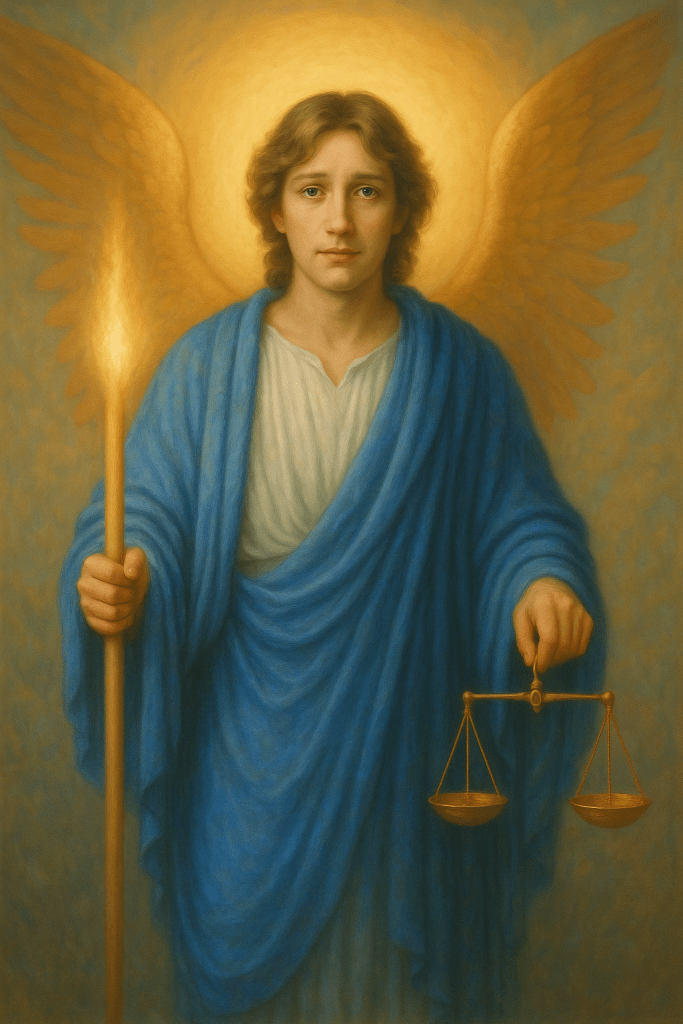
This morning, reflecting on that message, I asked my divine advisors which angel might be an advocate and guide. Archangel Raguel stepped forward.
Raguel is known as an angel of harmony and balance. And here in the U.S., both are sorely needed.
If you’re LGBTQ+, you might ask: “Why should I care?” After all, religion, especially Christianity, has too often been used to condemn us. As someone raised Catholic and a former priest, the little I knew of angels was through Christmas songs and scattered biblical stories.
That changed when a retreat session sparked my curiosity, leading me to study with Sunny Dawn Johnston, Kyle Gray, and Radleigh Valentine.
I believe with my whole heart that our souls are pieces of the divine, sharing the same essence as angels. Before we’re born, we choose to incarnate with a unique purpose and in a particular condition, including our sexual attraction and gender identity. Those choices take profound courage. And once here, living out that purpose can be incredibly hard.
And that’s where angels come in.
Angels are not only on high, hanging out on clouds. They walk beside us, offering daily love, support, and guidance through symbols and signs familiar to our personalities. We only need to ask. For me, that’s Oracle cards, songs from musicals, and yes, even Hallmark movies, to name a few.
During my morning reflection, I pulled three Oracle cards: The first, “Self-Employment” (from the Angels and Auras deck), reinforced the reading message; the second, “Ask and Receive” (from the Angel Guide deck), reminded me to simply ask; and the third, “Archangel Raguel” (from the Angel Prayers deck), became our advocate.
I’m not asking you to believe everything I share or forget the hurt and anger religion may have caused. I simply ask you to consider that the judgment we’ve heard is just BS, and might not reflect divine truth. Your experience is real, and you have the right to follow the path that makes sense to you.
And, as I was asked in my reading yesterday, be open. And see what possibilities might appear.
Sending you love and understanding, from one still trying to make sense of it all.
Full disclosure: The image of Raguel was generated by ChatGPT, based on a collaboration between me and the AI. The scales of justice and glowing staff are key elements. Here are the words the tool used, and that also reflect my own understanding:
For the scale, each side “represents opposing forces—truth and falsehood, compassion and judgment, harmony and conflict…. His glowing staff symbolizes divine authority and illumination—guiding truth, discernment, and balance. It can also represent Raguel’s role in bringing clarity, resolving conflict, and restoring harmony, especially in matters of justice and relationships.”
In these times, such things are desperately needed.
If you liked this blog and are interested in receiving an email for future blog posts, enter your email in the field below and click Subscribe.
The other day, I stumbled upon an article that spoke about those who still support the current administration. The essence of the article explained that many of those who still support it are driven by hatred and don’t care about anything the administration does or says. As a result, using logic to persuade them to change won’t work.
That stopped me in my tracks.
As I’ve been sending light and love out to those supporters in my meditation, I thought. Then, what is it that I can do? I immediately realized that beneath that hatred lies someone who is incredibly hurt and afraid. Perhaps that person grew up with a parent who passed their hatred on to them, or hurt them so badly that the seed of hatred was planted and grew as they faced hardships and disappointments in their life.
Again: so what can I do?
In this morning’s meditation, I visualized going up to them, and giving them a hug. I even imagined them squirming and lashing out as I continued to hug them. And then ultimately, letting go, releasing their anger, and crying. And I extended the hug to all around the world driven by hate.
Now, admittedly, I would likely struggle if I faced that person in reality. Sadly, as I watch TV and hear people spouting their hatred, I get angry, and even have to leave the room. So, for now, I give them a virtual hug, sending them love, and healing.
Finally, I want to acknowledge everyone who is challenging the words and actions of the administration with protests, who stand up to prejudice, greed, and injustice. One caution: As best as you can, let love drive your words and actions.
Blessings, peace, and a hug to you all.
If you liked this blog and are interested in receiving an email for future blog posts, enter your email in the field below and click Subscribe.
Busy and full days in 2025. I’m halfway through the first edit of book 2 of my spiritual fantasy series, tentatively titled ‘Revelations and Reckonings: Journey of a Spirit Healer. I received a few messages over the last month from my divine advisors that I wanted to share: Attend; Recognize your power but release control; and Feel and share the light.
Share the Light
Attend
Attend to your body: Does your body need special care right now? More rest? Are you working too hard?
Attend to your spirit: Is your psyche stretched to the limit with all that’s happening today. Is constant and chaotic news dragging you down, or causing you to be angry with others. Take time to reconnect to your divine self and feel the love and support of your guardian angel, guides, and God.
Recognize your power but release control
In the face of actions by the current U.S. administration, it’s easy to feel powerless. But we are not. We carry innate power not only as citizens, but by virtue of enfleshing the divine: our soul. Really take that in. Connect with the fullness of who you are, and feel the strength of all divine beings.
With that power comes the invitation to your part, whatever you identify that to be. But it also comes with a reminder to release control of the outcome. I know that’s difficult to do. And that leads me to the last message.
Feel and share the Light
Each day, experience the light that is your divine essence. A friend shared a practice that might help: while walking outside on a sunny day, imagine you have wings extended outward. Feel the light and warmth falling on them being absorbed into the depth of your being, strengthening you and helping you live your truest self. Then, throughout the day, radiate that light to all in our country and world. A practice I’ve added is to find childhood pictures of those currently in leadership. I imagine them to be hurting, scared children, desperately yearning for love and acceptance. By sending them light and love, my hope is that these children, now inner children inside the adult, experience a change and remember the best selves they are called to be.
Attend; Recognize your power but release control; Feel and share the light
Those are the messages I received. I radiate light and love to you as you bring your true self forward into the world.
If you liked this blog and are interested in receiving an email for future blog posts, enter your email in the field below and click Subscribe.














 Remember Your Divine You